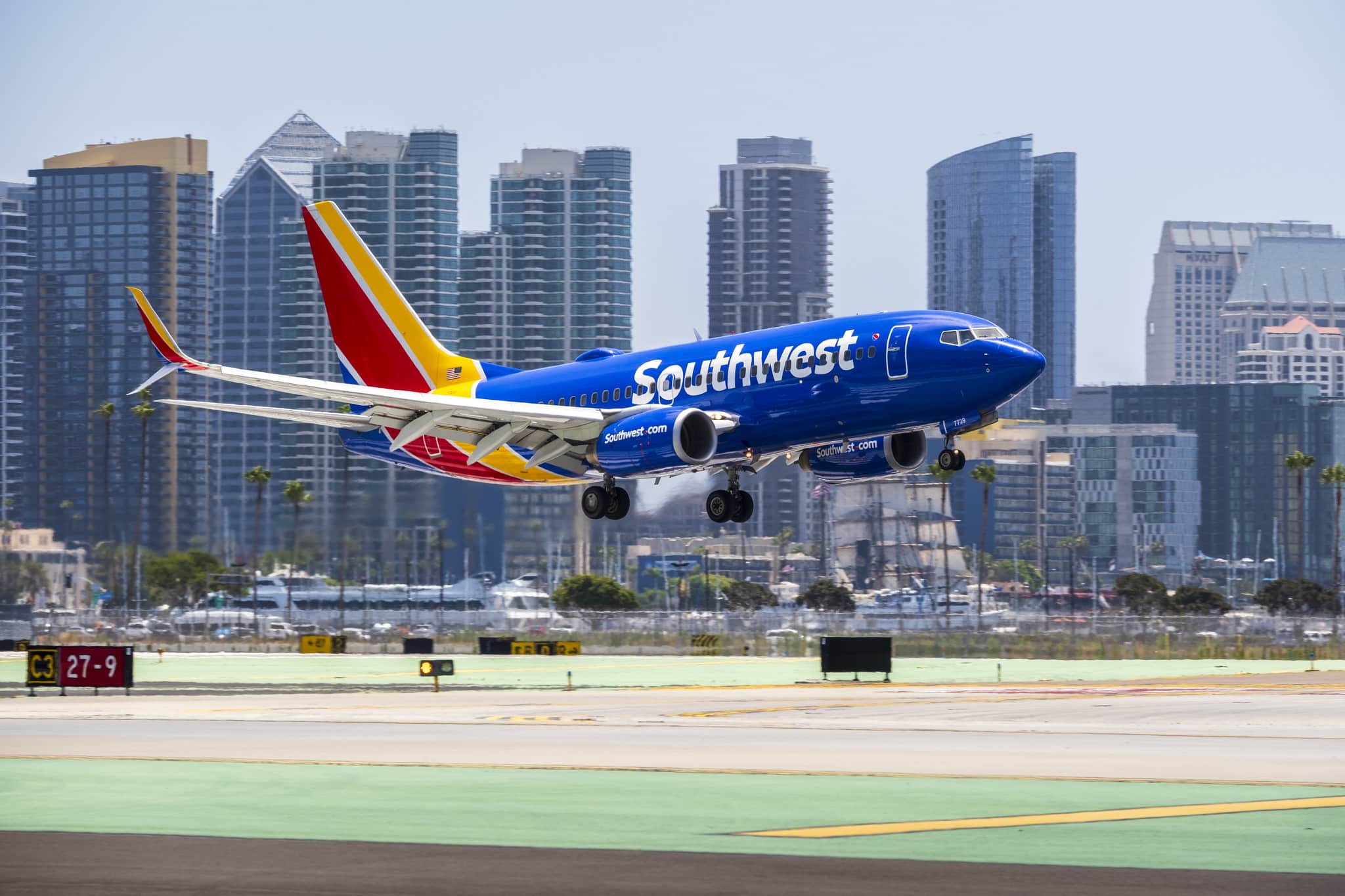
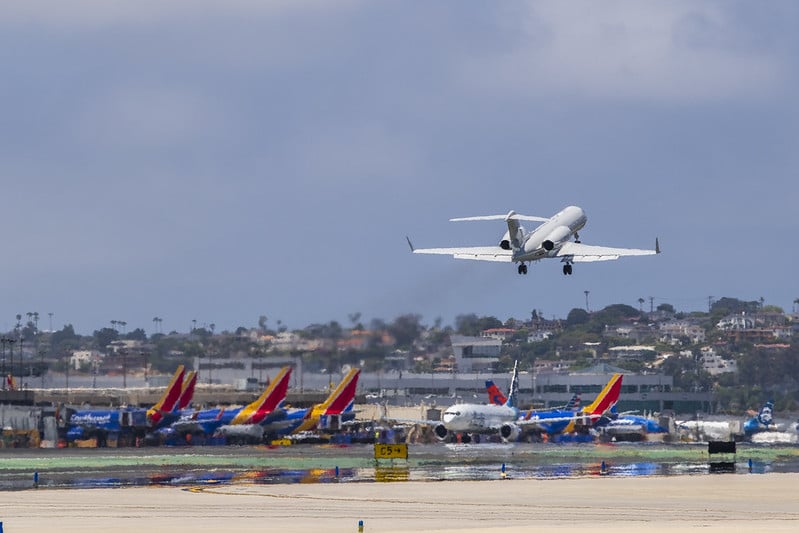
The Fleet (or type of aircraft an operator uses) Noise Quality score evaluates the noise contribution of each operator’s fleet as it actually operates at SDIA. Operators generally own a variety of aircraft types and schedule them according to both operational and marketing considerations. The Fly Quiet Program assigns a higher rating or grade to operators operating quieter, new generation aircraft, while operators operating older, louder technology aircraft would rate lower. The goal of this measurement is to fairly compare operators – not just by the fleet they own, but by the frequency that they schedule and fly particular aircraft into SDIA.
The method used here bases an operator’s Fleet Noise Quality Rating on established by the FAA’s 14 CFR Part 36 noise certification data. For each aircraft type, Part 36 specifies allowable noise levels at three measurement locations: approach, departure, and sideline. Part 36 allowable noise limits increase with weight, so that larger aircraft, serving more passengers, are not penalized as compared to smaller types. The rating method for the Fleet Noise Quality rating totals the difference between each aircraft’s certified noise levels at all three measuring points and the Stage 3 standard for that weight and number of engines. Aircraft with the greatest number of decibels below Stage 3 threshold are rated the best. Similar to and consistent with Part 36, the Fleet Noise Quality Rating allows for higher noise levels for larger aircraft. It is important to credit larger aircraft serving more passengers because they offer more air service in fewer flights and less total noise than multiple operations in smaller aircraft types.