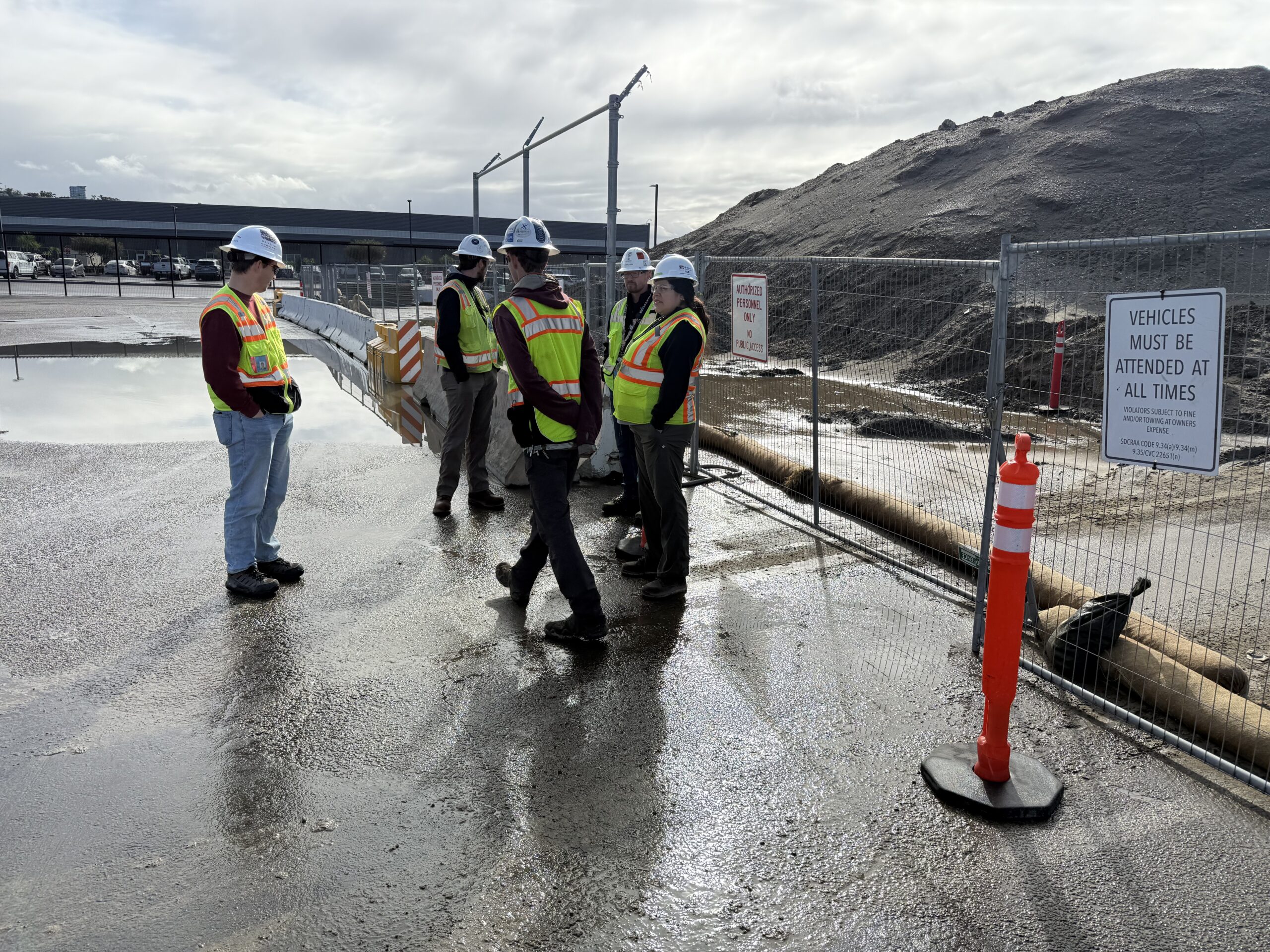
On a wet morning at San Diego International Airport, a small group of Airport Authority staff and environmental professionals were out inspecting construction job sites on the airfield, looking for more than meets the eye.
They were on a weekly Stormwater Pollution Prevention Plan inspection walk, looking for any impacts after the recent rainfall. If job sites are not kept clean, they may pose a risk as sediment and other potential pollutants could mix with rainwater.
Airport Authority Associate Environmental Specialist Laura Hernandez first went to inspect some of the storm drains protected with sandbags and additional best management practices (BMPs) around the drains to filter out sediment and pollutants entering the storm drains through stormwater runoff and eventually making their way into the neighboring San Diego Bay. Pointing to fresh sediment that had collected around the sandbags, she signaled that the BMP barriers had done their job.

Next, she joined the group for a walk at an active construction site to ensure stormwater best management practices were being followed. At an industrial facility like an airport, she says, with active construction projects, contractors are held to stringent standards to ensure compliance with state and federal environmental permits and requirements, and to prioritize environmental responsibility.
As they walked the site, below them sat the massive underground water cistern, capable of holding 900,000 gallons of rainwater, which is part of the new Terminal 1 project. It’s another way the Airport Authority catches stormwater runoff and maximizes stormwater capture around the airfield, with the future goal of treating and reusing the water.
More information about the Airport Authority’s Stormwater Pollution Prevention Plan can be found here.