
Flights
Before You Go
At the Airport
Opportunities
Tenant Info
The Authority
Investors & Financials
Planning, Noise, & Environment
83°F / 28°C / Fair
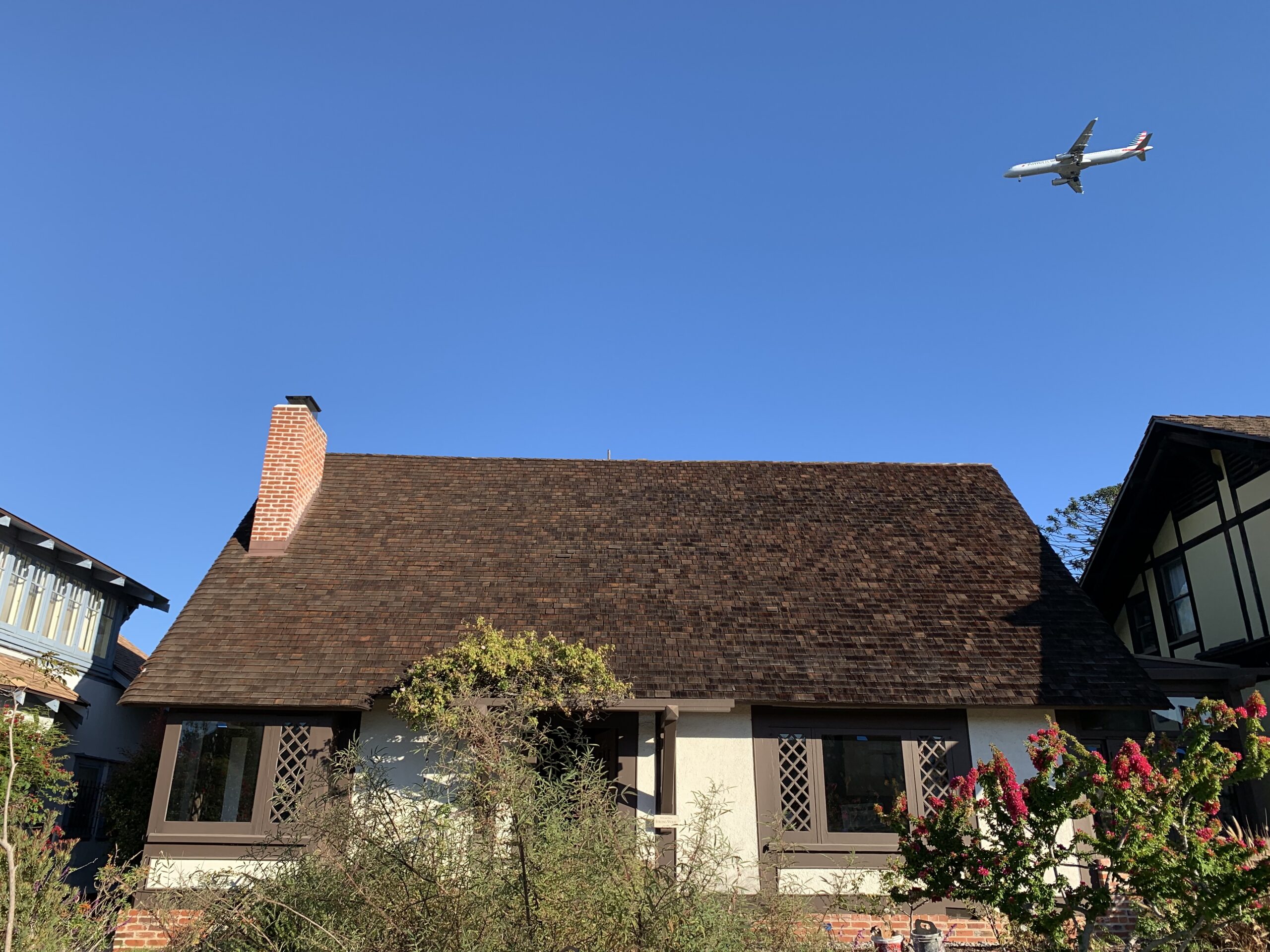
We’re helping San Diego families find a little more peace at home—reducing aircraft noise by at least 5 decibels, all while preserving the history and heart of each neighborhood. The Quieter Home Program (QHP) is an FAA-approved program that aims to reduce interior noise by at least five decibels, providing noticeable relief for eligible homeowners affected by aircraft noise from San Diego International Airport.
If you’d like more information, please contact the SAN Quieter Home Program team:
You may view the Quieter Home Video Transcript on YouTube.
Video Audio Description:
Welcome to the quieter home program.
You’ve been assigned a group and a program coordinator and you’re now on the path to a quieter home. In this video, we’ll cover eligibility,
policies, treatments, and the eight-step process so you know what to expect.
Since 2001, the Quieter Home program has sound insulated more than 6,000 homes.
According to FAA standards, homes in the 65 del contour area are considered affected by aircraft noise. This map
shows the contour with completed homes highlighted in purple. The program is funded by the San Diego County Regional
Airport Authority through FAA grants supported by ticket taxes from travelers. Because this funding comes
from the FAA, we must follow specific policies when treating your home.
Each homeowner is placed into a group with a shared timeline. The process typically takes one and a half to two years depending on FAA grant funding.
Please keep in mind schedules are tentative. Let’s review the eight-step process.
A key difference with this program is that the airport authority manages both the contractor and the work itself. We
serve as your advocates, ensuring everything meets industry standards and follows your plan. All deed owners must
sign two documents, the homeowner participation agreement and the navigation easement, free notary
services are available. You are completing step one, the homeowner meeting. Step two is your assessment.
Once you sign the required documents, we’ll schedule this visit.
A design team of six to eight experts will measure, photograph, and document your home to design treatments that
reduce aircraft noise. Photos and video are only for program use. Assessments last 1 to two hours and include a
representative from the airport authority. You are now moving into step three, acoustical testing.
In this step, our engineers confirm whether the average interior noise levels in your home are 45 dB or higher
with all doors and windows closed. This test is required by the FAA and is the only way to measure the effectiveness of
the treatments we provide. Here’s what to expect. Two to three acoustical engineers along with your program
coordinator will visit your home. One engineer will set up loudspeakers outside while another moves through your
rooms with a microphone. The session lasts about an hour. The speakers are loud, so we recommend relocating pets
and children. If your home averages 45 dB or greater, you’ll move on to step four. Homes below this level may still qualify for limited treatments.
Step four is the design review meeting.
This is where you will review your treatment plan and decide whether to proceed. You’ll receive a design packet about a week before your meeting held
either virtually or in our office with your coordinator and an architect. The architect will review your treatments
options like door styles and hardware and any code compliance pre-work. Treatments may include acoustic windows,
doors, and ventilation systems. Not all treatments apply to every home and upgrades are not available since the
program is grant-f funded. Because this program uses federal funds, all products must meet by American requirements. Only a few vendors make these products,
limiting options. If your home is historic, windows and doors must match original style and materials. For
non-historic homes, acoustic windows reduce noise by at least 5 dB. They have thicker frames, low E coating, and are
available in white or tan. Historic homes require windows and doors that match original style while meeting
standards. A wood sash with thicker glass may be installed while keeping the original frame. Additional window types
such as skylights, garden windows, and fixed glass may also be treated.
Acoustic doors come in wood, steel, or fiberglass.
Color choice may depend on HOA. Locks include knob or lever in four finishes.
Glass options include clear, obscured, or with grids.
Sliding doors may also be replaced with acoustic vinyl models. Ventilation options include standalone AC, energy
recovery ventilation, or waving mechanical treatments.
Each provides fresh air with equipment in attics or crawl spaces and controls inside.
Before construction, inspectors may require pre-work items. These can be small like outlet covers or larger like
an electrical panel upgrade. This is your last chance to approve or withdraw without obligation.
After approval, plans go to the city,
then to public bid. Step five is the contractor measurement walk. The contractor takes precise measurements,
reviews the scope with the design team,
and tests for lead or asbestous in work areas. The program covers abatement and
painting if needed. All pre-work must be done before this appointment.
Products are customuilt and take four to 6 months to manufacture.
Once the contractor provides the schedule, your coordinator will share your construction dates.
Step six is the preconstruction walkthrough.
The team will show you what needs to be done, such as moving furniture, covering items, removing blinds, and securing
pets. During construction, there will be dust, so cover your furniture with plastic. Security systems must be removed and reinstalled by you.
Curtains, shutters, and blinds must be removed if they are inside the window frame.
If your home is a rental, please include your tenant in this meeting as they will be expected to prepare the home. A checklist will be provided.
Step seven is construction.
On day one, the inspector checks that your home is prepared.
If your home is not prepared, the contractor will not be responsible for damages.
Construction takes 10 to 30 business days, Monday through Friday, 8:00 a.m. to 5:00 p.m.
A lock box may be used if you cannot be home.
Inspectors will ensure work meets standards and your design. Any window removed will be secured that same day.
Your house will always be left weathertight and secure.
Step eight is the post construction walk through. The team will explain how to use and maintain your new products and
give you a warranty packet. Maintaining treatments and handling warranty claims are your responsibility.
We will also ask you to complete a short survey which helps us improve the program. Some homes may require post
acoustical testing. Finally, months later, you will receive a letter from the county assessor.
Although your home will not be reassessed for higher taxes, you must complete and return the form.
Instructions are included with your warranty packet.
That was a lot of information, and we encourage you to revisit this video on our website anytime. If you have
specific questions, your coordinator will answer them during your assessment appointment. On behalf of our team of
nearly 30 people, thank you for learning about the quieter home program.
We are proud to serve you and look forward to working with you and your family.
Homeowners interested in the Quieter Home Program must submit a Participant Application. Once your application has been returned to the Program, your home will be placed on the General Waiting List. Priority is given to those in the loudest noise impacted areas and with the longest length of ownership.
This initial meeting introduces the Quieter Home Program (QHP), outlining what to expect in each step of the process. It’s your opportunity to learn about eligibility, treatments, and overall project timeline.
| Category | Type | Vendor Name | Phone | Website |
|---|---|---|---|---|
| Windows | Vinyl | Prime Window Systems | 800-375-5570 | www.primewindowsys.com |
| Windows | Vinyl | AMSCO | 562-204-6949 | www.amscowindows.com |
| Windows | Wood | T.M. Cobb* | 951-248-2440 | www.tmcobb.com |
| Windows | Steel | St. Cloud Windows | 800-383-9311 | www.stcloudwindow.com |
| Windows | Steel | Vancouver Door Co. | 888-801-9255 | www.wausauwindow.com |
| Windows | Steel | Custom Window, Model 8300 | 877-678-2983 | www.wausauwindow.com |
| Doors | Vinyl Sliding | Prime Window Systems | 800-375-5570 | www.primewindowsys.com |
| Doors | Vinyl Sliding | AMSCO | 562-204-6949 | www.amscowindows.com |
| Doors | Wood Swinging | Karona Door by Jeld-Wen | 800-829-9233 | www.karonadoor.com |
| Doors | Wood Swinging | T.M. Cobb* | 951-248-2440 | www.tmcobb.com |
| Doors | Wood Swinging | Vancouver Door Co. | 888-801-9255 | www.vancouverdoorco.com |
| Doors | Steel Swinging | Republic Doors and Frames | 800-733-3667 | www.republicdoor.com |
| Doors | Secondary | Mon-Ray, Inc. | 800-544-3646 | www.monray.com |
| Mechanical | Condenser | York | 877-874-7378 | www.york.com |
| Mechanical | Condenser | Trane | 704-655-4000 | www.trane.com |

San Diego International Airport (SAN) provides seamless travel experiences with nonstop flights to destinations worldwide, offering convenient services and amenities for all travelers.
SDCRAAP.O. Box 82776San Diego, California 92138-2776